

Observe. Record. Discuss.
Separate the key, handle and door symptoms
Explain which action feels different. Does the key enter normally but resist turning? Does the handle move unusually? Does the door rub or need pushing before it closes? Record the symptoms in your own words. Knowing the technical name of the lock is less important than describing what happens. Mention whether the behaviour is constant or intermittent and when you first noticed it. Avoid combining several actions into a vague statement that the lock is broken. A precise account makes it easier to understand the problem before deciding which assessment or repair needs to be discussed.
Stop treating extra force as a solution
If normal operation has become difficult, repeated force can leave you with a more immediate access problem. Do not pull hard on the handle or repeatedly twist the key to demonstrate the fault. Do not put an improvised tool into the keyway. Explain whether the property can currently be entered and secured, and whether there is another authorised entrance. These facts affect the urgency of the conversation. If the situation changes and you can no longer lock the door or get inside, call with that new information rather than assuming a routine enquiry already covers the changed circumstances.
Describe the whole entrance
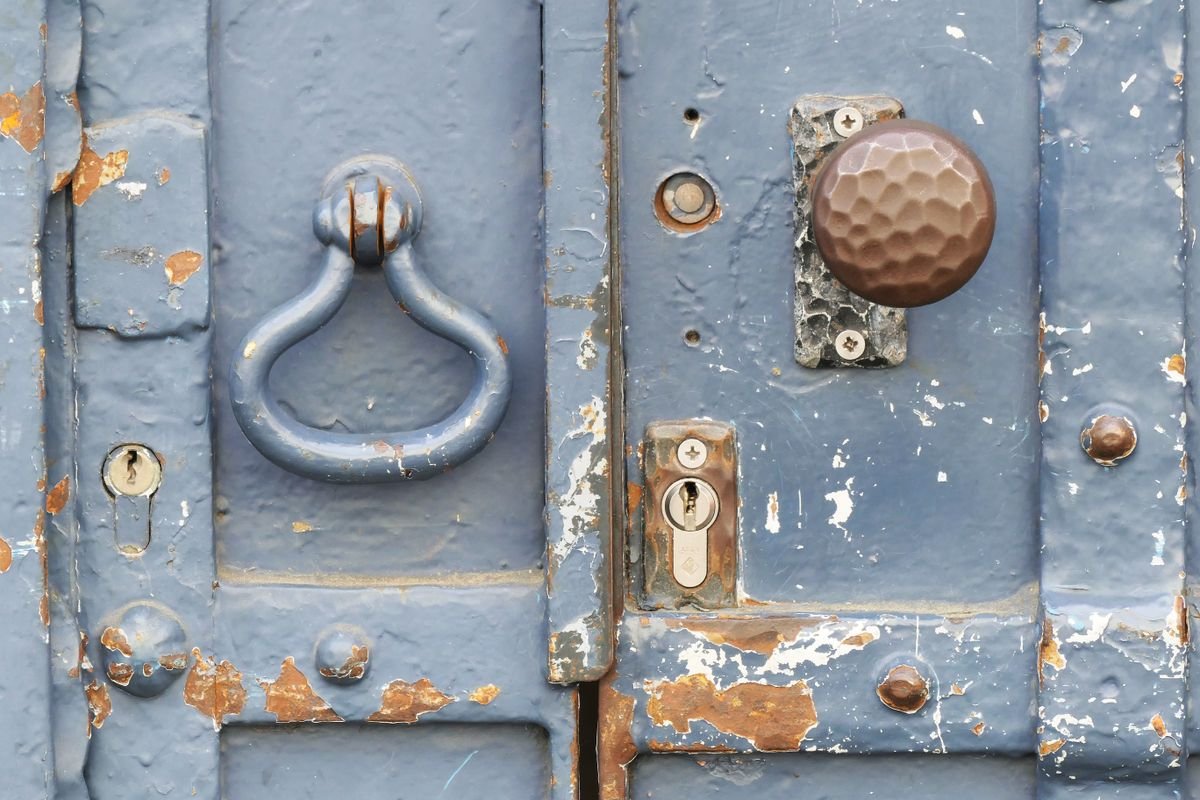
A lock operates as part of a door and frame. Give the material of the door if you know it, the number of visible locking devices and any obvious change in how it closes. Photographs can show the overall entrance and accessible hardware without taking anything apart. Keep keys and private access details out of the frame. Mention previous work on the door or any relevant product information you have retained. These details provide context; they do not establish the cause remotely. A fitting that looks familiar may still differ internally from another model shown in an online guide.
Leave product choices until the fault is understood
A stiff lock does not by itself establish which component needs attention. Ask whether inspection is needed before parts or a replacement can be specified. If you have already bought hardware, tell the locksmith the model and ask about compatibility before treating it as part of a confirmed job. Do not add oil or another product unless it is appropriate under the manufacturer's instructions for the actual mechanism. A general household product is not automatically suitable for every lock. The useful starting point is an assessment of the entrance and a clear explanation of the proposed work.
Explain the property's access requirements
Say whether the door is the main entrance to a home, a shared door or part of business premises. In a rented or managed property, identify the contact who can approve work. Explain occupied hours, residents who need entry and any restrictions imposed by the building manager. An entrance may need to remain in use while arrangements are made. Discuss this rather than assuming the locksmith can work around every access requirement without notice. If another person will meet them, confirm that person's availability through your normal property-management process before an appointment is agreed.
Ask the right repair questions
Ask what needs assessment, which work is proposed and whether the quotation covers labour and parts. Clarify any attendance or minimum charge and VAT where applicable. If inspection finds an additional issue with the door or frame, agree how the options and costs will be explained before work expands. Ask what information will be provided about any replacement hardware. A repair should be discussed against the actual fault, while a planned upgrade is a separate aim that can be considered alongside it. Keeping those two requests clear helps avoid an unclear scope and unexpected assumptions.
Keep a useful record of changing behaviour
A short note can be enough: the front-door key has become difficult to turn over the past week; the handle also feels harder to lift; the property can still be secured. Add only the observations that apply to your door. After work, keep the explanation of what was found and any product instructions supplied. If a symptom returns, describe when and how it differs from the original fault. Tell the contact about the previous work. A clear follow-up is more useful than assuming the same part has failed again without an assessment of the current situation.
A few common questions
Does a stiff key always mean I need a new cylinder?expand_more
No. Explain the key, handle and door symptoms so the whole entrance can be assessed before a particular repair or replacement is specified.
Should I keep using more force?expand_more
Avoid forcing a mechanism that is behaving differently. Tell the locksmith whether the property can currently be entered and secured, and call if that changes.
Can a photograph confirm the fault?expand_more
A photograph can help show the door and hardware. It does not establish every internal fault or confirm the right component without further assessment.
Illustrative photography: Jan Tinneberg · Pawel Czerwinski / Unsplash.