
Observe. Record. Discuss.
Start with what has changed
Look for a change from the property's normal condition. A patch that returns after drying, a cupboard base that feels damp, or paint that has begun to lift can be worth recording. Note the room, the position and the date you first noticed it. Take a photograph from a safe, dry position so you have something to compare later. Avoid calling every damp mark a plumbing leak: water can enter a building in different ways, and the source needs assessment. Describe the evidence rather than presenting a diagnosis as settled.
Notice timing and nearby water use
Does the mark become more noticeable after a shower, when a sink is used, or even when nobody has used that room? These observations can help explain the pattern. You do not need to recreate the fault repeatedly or leave a fitting running to demonstrate it. Write down what has already happened during ordinary use. Include any recent change, such as a new appliance, a moved cabinet or work in an adjoining room. A timeline is often more useful than several close-up pictures that do not show where the problem sits within the property.
Separate an urgent escape from a recurring concern
Water actively spreading through a room needs a different conversation from an old, dry stain. Tell the plumber whether water is still appearing and whether it is close to electrical fittings. Keep people away from unsafe wet areas. Do not touch wet switches, sockets or appliances. If you already know your internal stop valve and can reach and operate it safely, isolating the water may limit an active escape. Do not force a seized valve or enter an unsafe space to find it. Explain if you cannot stop the water when calling for help.

Photograph the setting as well as the mark
A useful set of images includes one view of the room, one of the affected area and a closer view of the visible issue. Keep personal paperwork and private details out of the frame. Photograph accessible pipework only as it stands; do not remove covers, disturb insulation or lift flooring for a better picture. Mention if the source might involve another flat or a shared service. For a managed building, the person responsible for communal systems may need to be included in the discussion before access or investigative work can be arranged.
Prepare for a leak assessment
Ask what the initial assessment covers and how any further investigation would be agreed. Access may be straightforward around an exposed fitting and more involved where a suspected pipe is concealed. Explain fitted furniture, occupied rooms and restrictions on working hours in advance. An enquiry should distinguish finding the source from repairing it and from making good decoration afterwards. These may involve different work or separate approval. Confirm how findings will be explained, what charges are proposed and who can authorise the next step if the source is not immediately visible.
Keep a short record after the visit
Retain the description of the work, any photographs you are given and the advice relevant to the affected area. A mark may remain visible after the cause has been addressed, so ask what observations would justify contacting the repair provider again. Do not assume a coat of paint confirms that the underlying issue has been resolved. If a new symptom appears, explain how it differs from the original problem. For a rental home, share the agreed repair information through the appropriate landlord or managing-agent contact so everyone works from the same account of what was found.
A useful example of a repair brief
Instead of writing 'there is a leak somewhere', try describing the location and pattern: 'The base of the kitchen cupboard below the sink is wet after the sink is used. We first noticed it yesterday. Water is not currently spreading across the floor. The cupboard is accessible and someone can be present on weekday mornings.' Only include facts that apply to your situation. Add the full postcode and a contact number, and explain any urgency. This gives the person receiving the enquiry a clearer starting point while leaving the diagnosis to an assessment.
A few common questions
Can damp prove that a pipe is leaking?expand_more
No. A damp patch is an observation, not a confirmed source. Share where it appears and when it changes so the appropriate investigation can be discussed.
Should I open the wall before a plumber visits?expand_more
Do not open finishes simply to identify a suspected leak. Explain what is accessible and ask how any proposed investigation and making-good work would be authorised.
Can I arrange this for a rented property?expand_more
Yes. Include the landlord or managing-agent contact, the resident’s agreed access arrangements and the person who can approve investigation or repair costs.
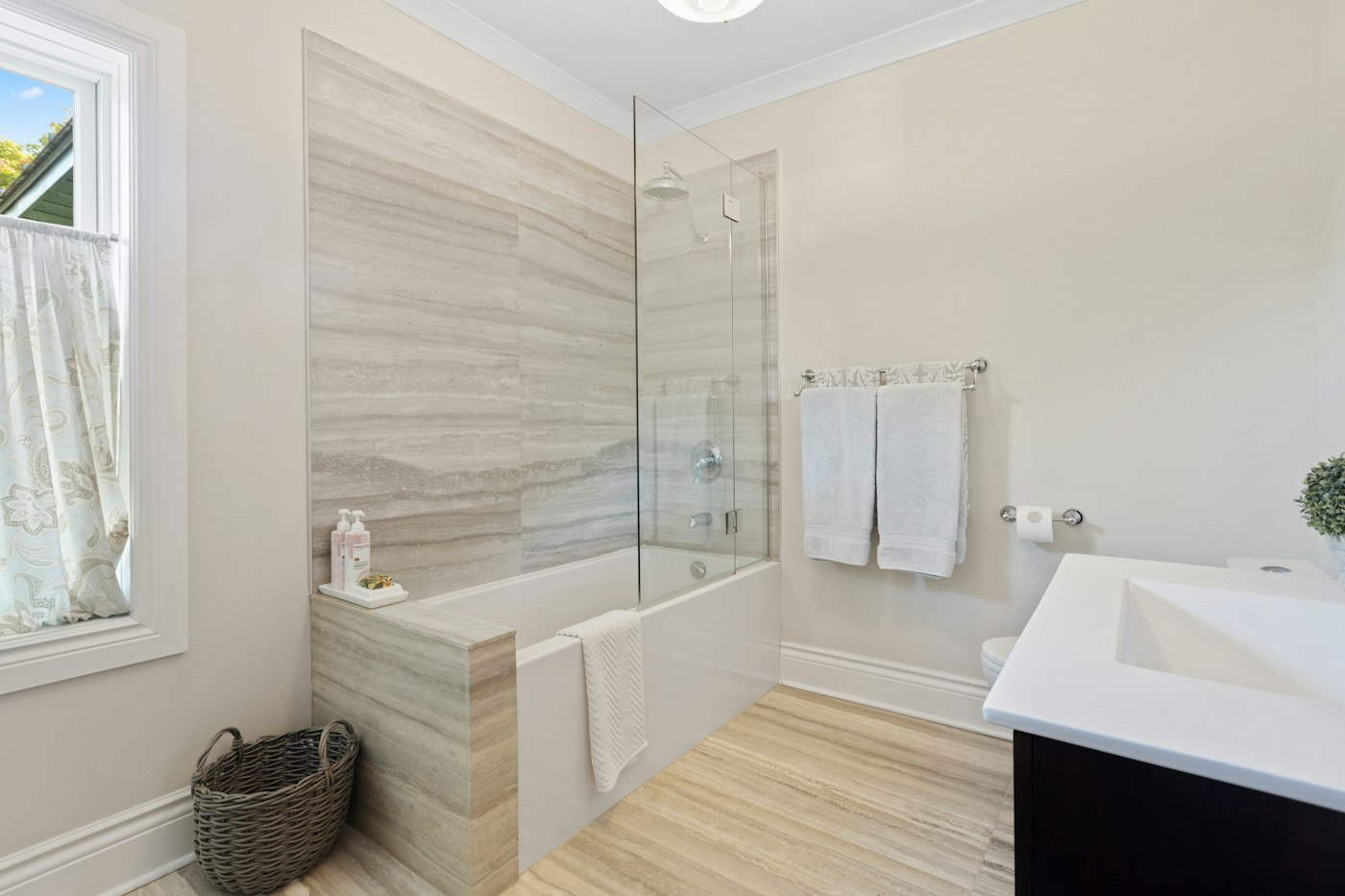
Illustrative photography: Point3D Commercial Imaging Ltd. · Zac Gudakov / Unsplash.